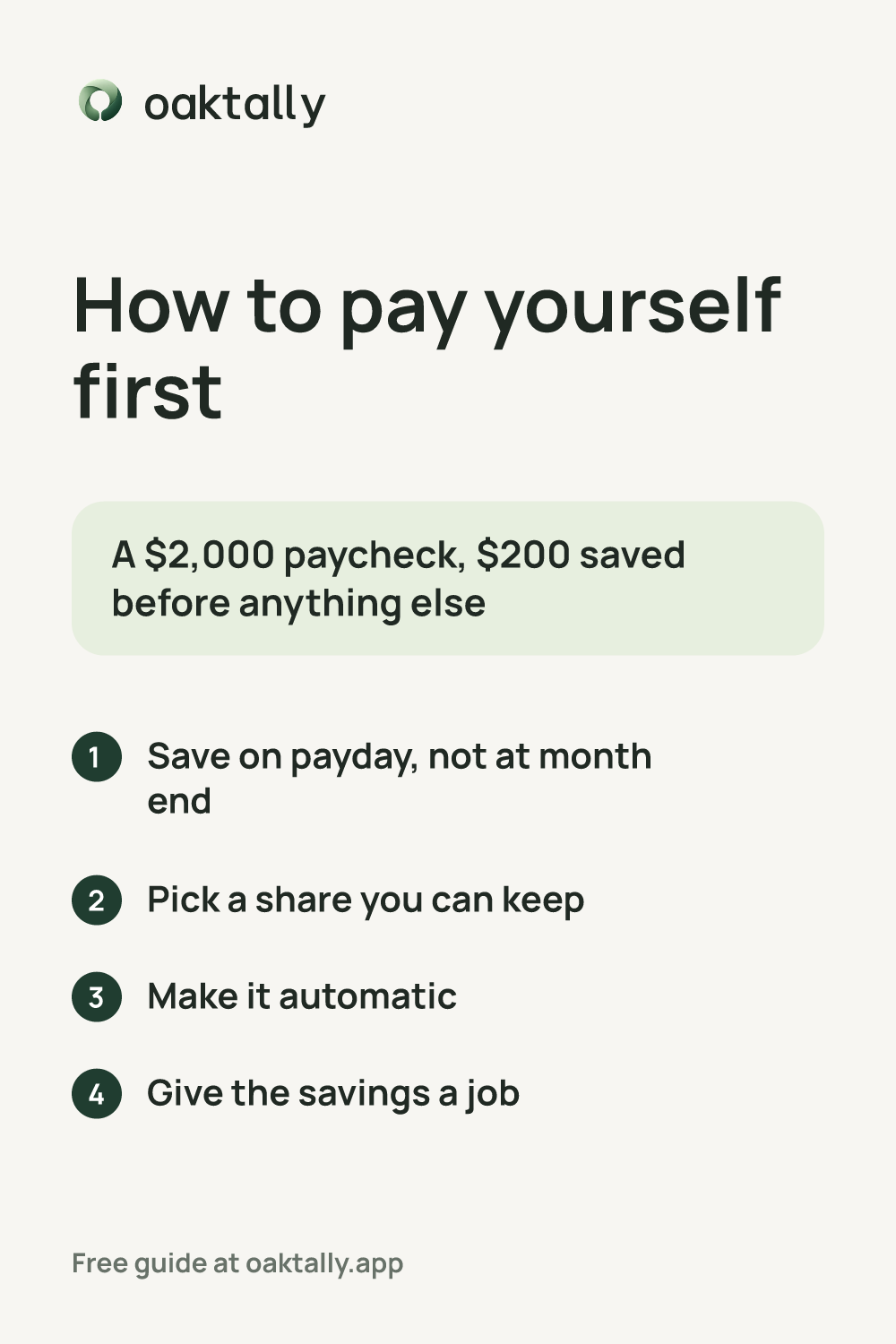

1Save on payday, not at month end
What is left at the end of the month is often nothing. Saving first means the saving happens.
2Pick a share you can keep
Start with 5% or 10% of take-home pay. If bills do not fit after that, lower it rather than skip it.
3Make it automatic
Set a recurring transfer to savings for the day after payday. Many employers can also split your direct deposit.
4Give the savings a job
Emergency fund first, then goals like a trip or a house. Money with a name is harder to spend.
How to do it in Oaktally
Picking 10% takes a minute; doing it every payday is the hard part. Oaktally puts savings in the plan before your categories, every month.
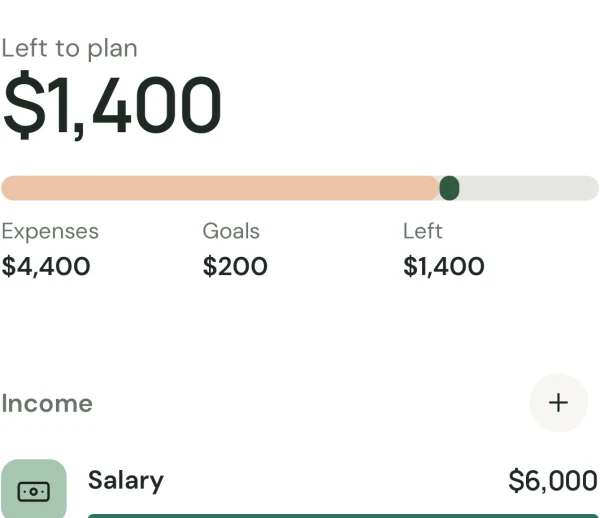
- Plan your incomeAdd what you expect to earn. Plan shows what is left to plan.
- Plan savings firstIn Plan, add a goal and set its Monthly amount to your share, like 10% of your pay. Plan counts it before your categories.
- Add money on paydayOpen the goal and tap Add money the day you are paid. The ring shows how far along you are.
Try it with your numbers
Enter your target, what you have and your deadline.
Plan deposits by dateFrequently asked questions
Is pay yourself first the same as the 50/30/20 rule?
They fit together. 50/30/20 sets the size of savings at 20%; paying yourself first sets the timing.
Should I pay myself first if I have debt?
Keep a small emergency fund first. Then put extra money toward the debt with the highest interest rate.
Further reading
CFPB: Building an emergency fund ↗CFPB: Income, bills, spending and savings tools ↗Educational examples, not individual financial advice.