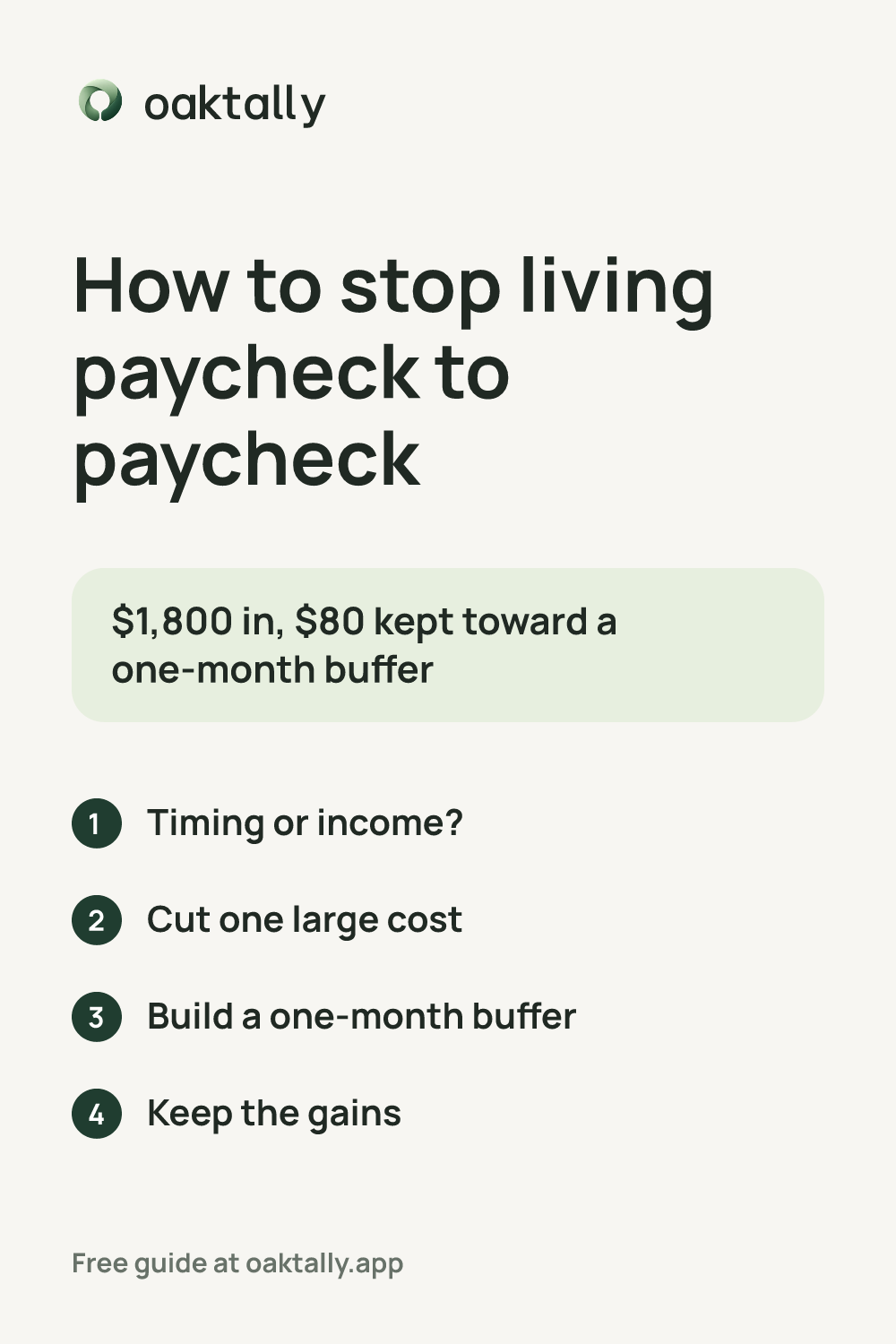

1Timing or income?
Write each bill under the paycheck that pays it. If one paycheck is short but the month adds up, it is a timing problem and the steps below fix it. If the month itself does not add up, start with the low-income budget guide.
2Cut one large cost
Rent, a car payment or a phone plan moves the number more than coffee. Call to lower one bill this month.
3Build a one-month buffer
Keep a little from every paycheck until you have one month of bills saved. Then each month is paid with last month's money.
4Keep the gains
When a raise or a paid-off debt frees up money, move half of it to savings before it gets spent.
How to do it in Oaktally
Matching bills to paydays only works if you keep doing it. Oaktally keeps bills and paydays on one timeline, so you see a short week before it arrives.
- Add your paydays and billsTurn on Repeat for your salary and each bill. Recurring shows them on one timeline.
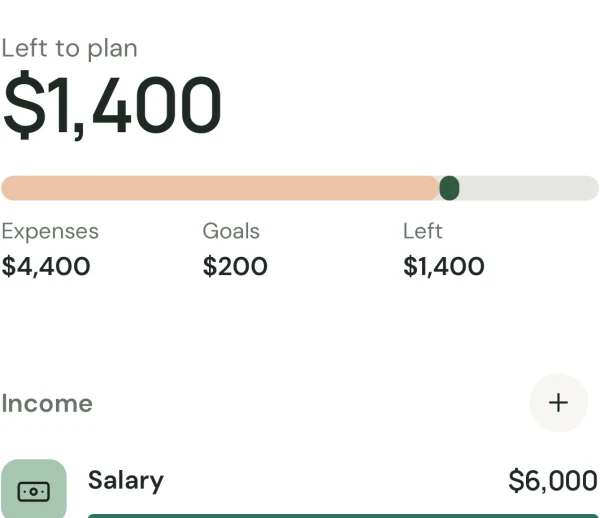
- See what is left to planPlan shows your expected income minus what you have planned.
- Get a reminder at 80%Turn on Remind me at 80% for a category. Oaktally shows a reminder in the app before it runs out.
Try it with your numbers
Put each bill under the payday that covers it.
Plan by paycheckFrequently asked questions
What if the problem is not enough income?
Then timing fixes will not close it. If your bills are more than your pay every month, see the low-income budget guide for what to cut first and where to find help.
Should I pay off debt or build a buffer first?
Start with a small buffer so surprises do not go on a card. Then split extra money between the two.
Further reading
CFPB: Income, bills, spending and savings tools ↗Educational examples, not individual financial advice.