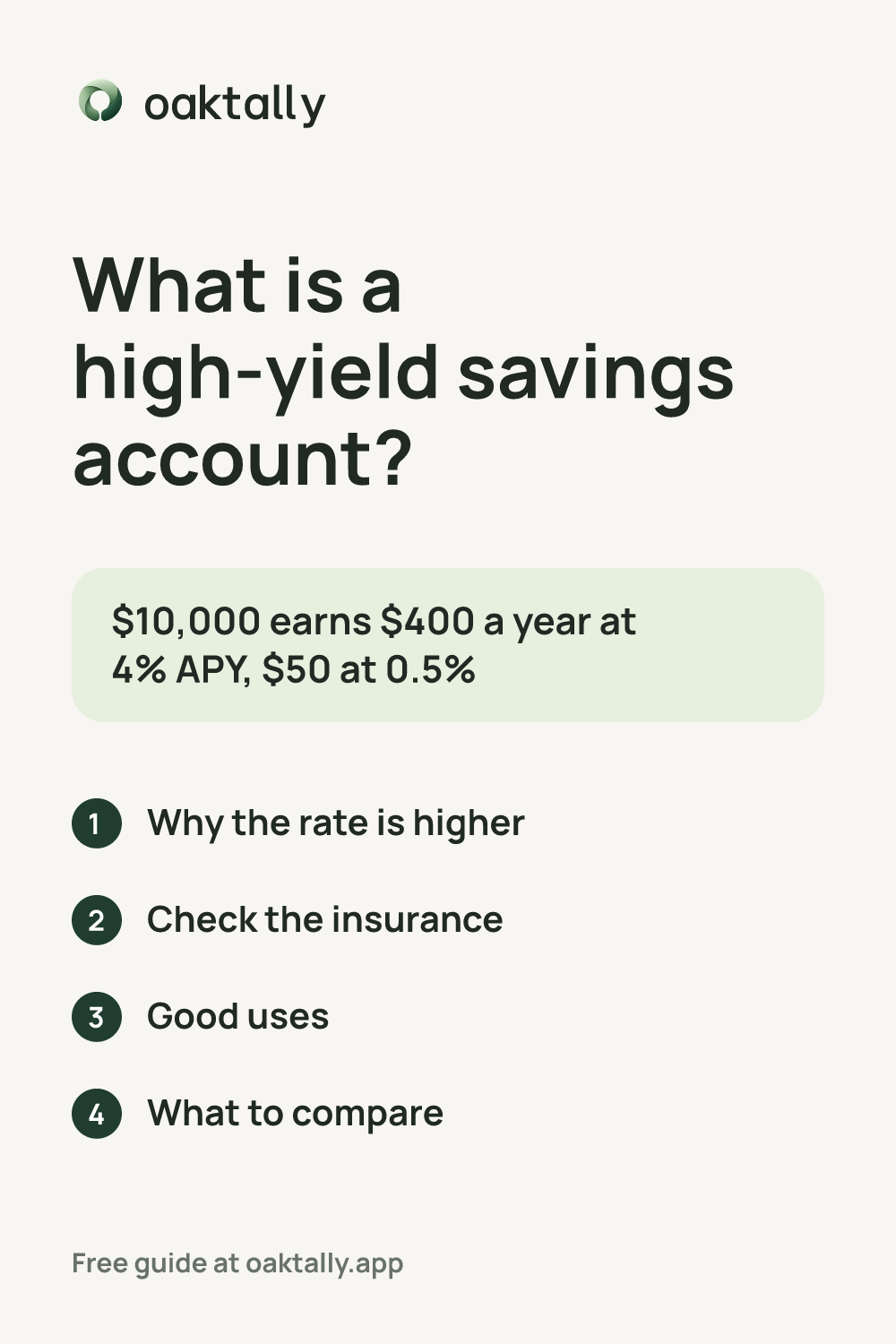

1Why the rate is higher
Online banks have fewer branches and pass some savings on as interest. Rates move with the Fed's rate decisions.
2Check the insurance
Look for FDIC insurance at a bank or NCUA at a credit union. It covers up to $250,000 per depositor per bank.
Source: FDIC
3Good uses
An emergency fund and sinking funds for known costs. The money stays safe and ready.
4What to compare
The APY, monthly fees, minimum balance and how fast transfers reach your checking account.
How to do it in Oaktally
A good rate helps the money you put in. Oaktally helps you keep putting money in, every month.
- Add the accountAdd your high-yield savings account with its balance.
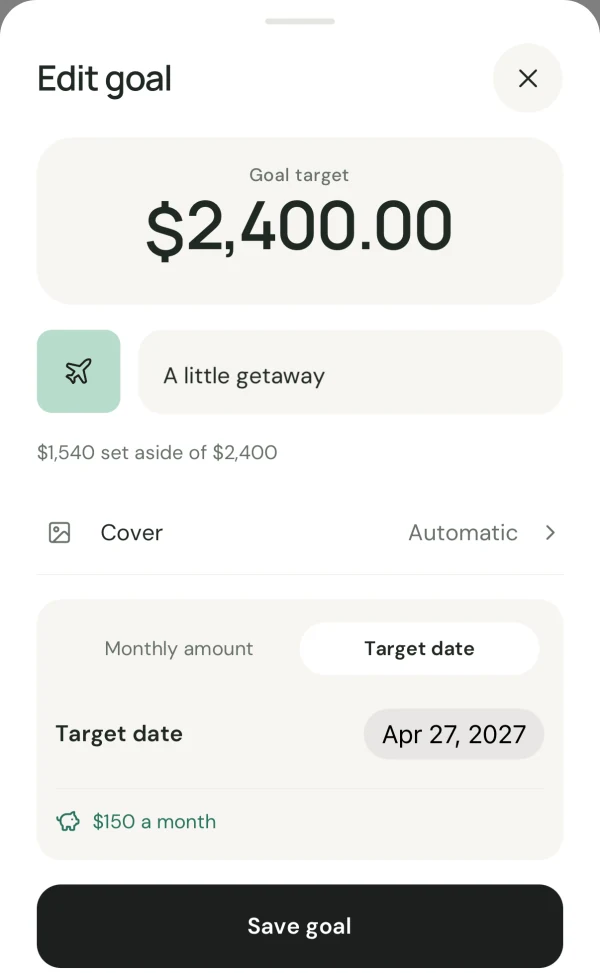
- Give it a goalIn Plan, add a goal like an emergency fund and choose Target date.
- Add money each paydayThe ring shows how far along you are.
Try it with your numbers
Enter your monthly costs and how many months you want covered.
Size your emergency fundFrequently asked questions
Are high-yield savings accounts safe?
Yes, at an FDIC-insured bank, up to $250,000 per depositor per bank.
Can the rate go down?
Yes. Most rates are variable and change when the Fed changes rates.
Further reading
FDIC: Financial products that are insured ↗Educational examples, not individual financial advice.