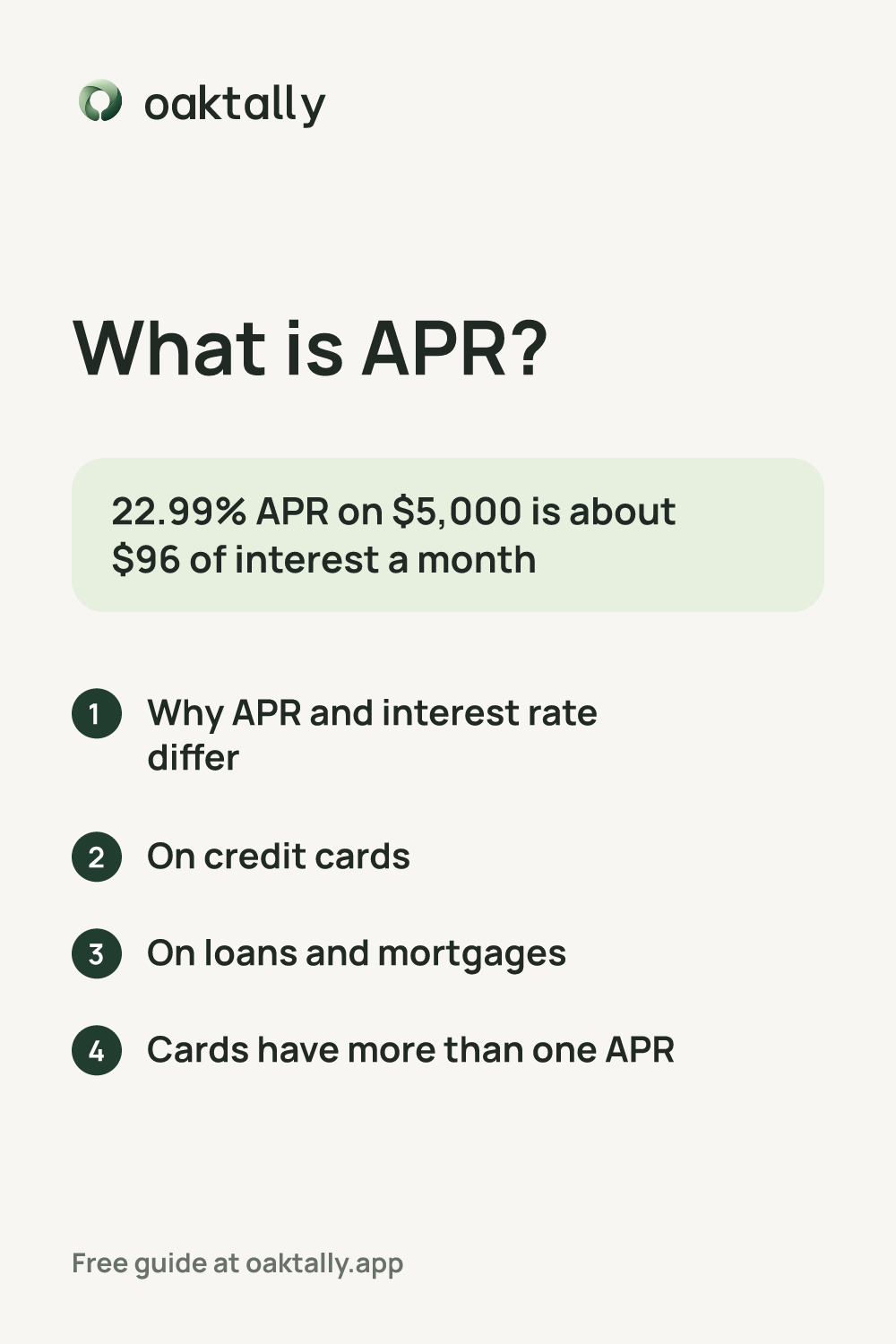

1Why APR and interest rate differ
The CFPB defines APR as the interest rate plus additional fees charged with the loan. Compare APRs with APRs, never with interest rates.
Source: CFPB
2On credit cards
Many cards charge interest daily, at your APR divided by 365, on your average daily balance. APR divided by 12 gives a close monthly estimate. With a grace period, paying the full statement balance by the due date avoids interest on new purchases.
Source: CFPB
3On loans and mortgages
Fees like origination charges raise the APR above the interest rate. A lower APR usually means a cheaper loan.
4Cards have more than one APR
Purchases, balance transfers and cash advances can each have their own rate. Your statement lists them.
How to do it in Oaktally
Knowing the rate helps once. Oaktally keeps the payment in your plan and shows the balance fall.
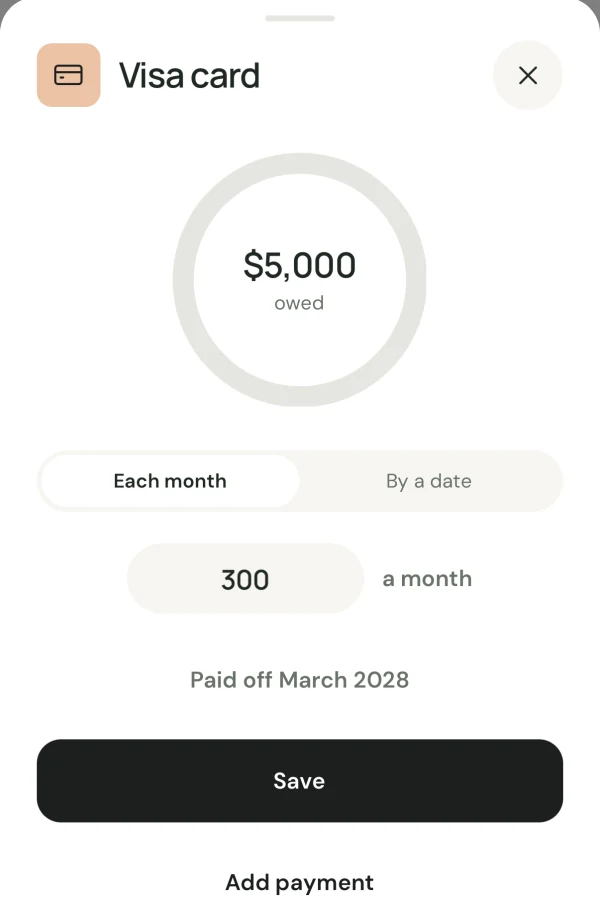
- Add the card as a debtIn Plan, add a debt, pick Card, name it and type what you owe.
- Pick a payment or a dateEach month shows when it is paid off. By a date shows the payment you need.
- Record each paymentAdd payment logs a transfer to the card, and the Debt bar fills.
Try it with your numbers
Enter your balance, APR and monthly payment.
Work out your payoff dateFrequently asked questions
What is a good APR for a credit card?
Lower is better. The Fed's data put the average for accounts paying interest at about 22% in 2026.
Is APR monthly or yearly?
Yearly. Divide by 12 for a rough monthly rate. Many cards actually charge a daily rate, so your statement can differ a little.
Further reading
CFPB: The difference between a loan's interest rate and the APR ↗CFPB: How does my credit card company calculate the interest I owe? ↗Federal Reserve: Consumer credit G.19, credit card interest rates ↗Educational examples, not individual financial advice.