
1Check that it adds up
Starting balance, plus deposits and interest, minus withdrawals and fees, equals the ending balance. Some banks list fees inside withdrawals; count them once.
2Read every withdrawal
Look for charges you do not recognize, double charges and subscriptions you forgot about.
3A worked example
Starting balance $1,250. Deposits $2,400 and $1 of interest. Withdrawals $3,038 and a $12 fee. $1,250 + $2,400 + $1 - $3,038 - $12 = $601, the ending balance.
4Look for fees
Monthly maintenance, overdraft and ATM fees add up. You can ask the bank to waive them.
5Report problems fast
Tell your bank about a charge you did not make as soon as you see it. If your debit card is lost or stolen and you report it within two business days, you are liable for $50 at most.
How to do it in Oaktally
Reading one statement takes ten minutes. If you log as you go, the month-end check is a quick match.
- Log spending as it happensAdd each purchase by voice, with a receipt photo or with a tap.
- Compare with your statementOnce a month, check your entries against the statement and add anything missing.
- Update the balanceUpdate balance saves what the bank shows, so your accounts stay right.
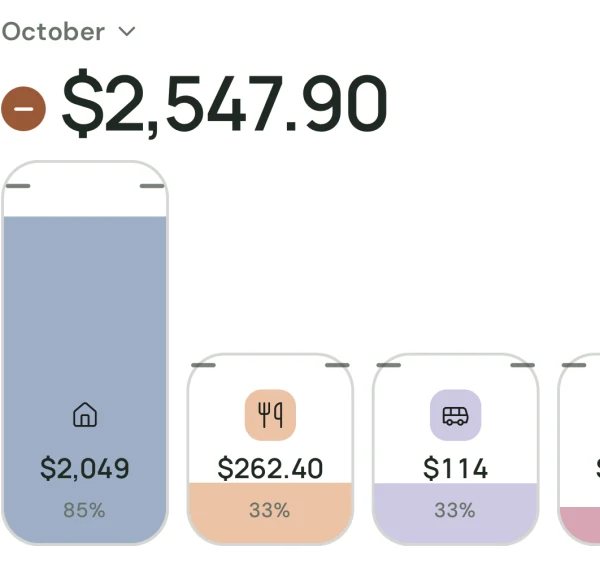
Try it with your numbers
Put your own income and costs into the free worksheet.
Build your monthly planFrequently asked questions
How long should I keep bank statements?
A year is enough for most people. Keep the ones you need for taxes, a loan or a dispute longer.
What does pending mean?
The bank has the charge but has not finished it. The amount can still change, like a tip at a restaurant.
Further reading
CFPB: Income, bills, spending and savings tools ↗CFPB: Liability for unauthorized transfers (Regulation E) ↗Educational examples, not individual financial advice.