
1Index is the strategy
An index fund holds the same investments as an index instead of picking them. ETF and mutual fund describe the wrapper.
2How trading differs
Mutual fund orders fill at the end-of-day price. ETF prices move all day and stay close to the value of what they hold.
3Costs
Compare the expense ratio, the yearly fee as a percent. Low-cost index options of both kinds often charge well under 0.1%.
4Which to pick
If both track the index you want at a similar cost, pick what your account makes easiest to buy automatically.
How to do it in Oaktally
Choosing a fund is one decision. Oaktally keeps what you hold in view beside the rest of your money.
- Add the accountAdd your brokerage account and its value.
- Track holdings on PremiumAdd the funds or stocks you own; Premium prices them with each market close.
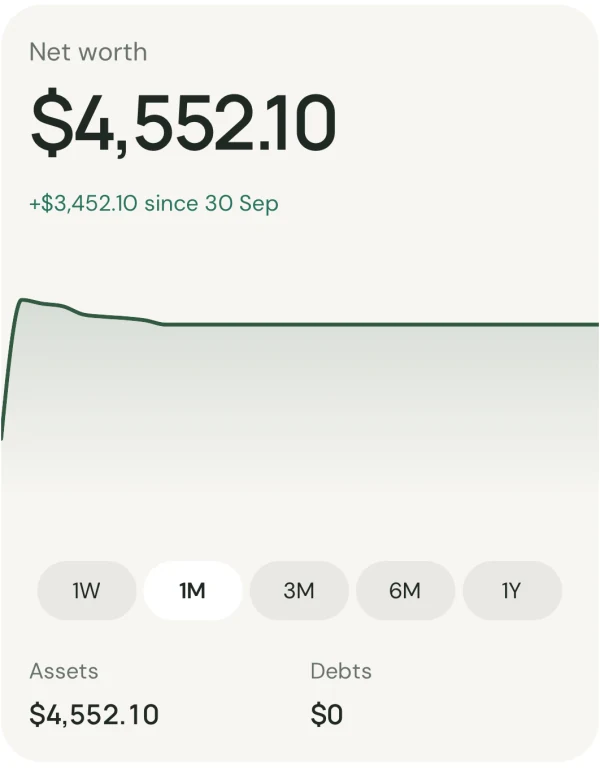
- See it in your net worthHome counts it beside your cash and debts.
Frequently asked questions
Are ETFs better for taxes?
ETFs often pass on fewer capital gains in a taxable account. Inside a 401(k) or IRA it makes no difference.
Can I set up automatic investing?
Most brokerages let you invest a set amount in mutual funds automatically; many now offer the same for ETFs.
Further reading
SEC: Exchange-traded funds ↗Educational examples, not individual financial advice.