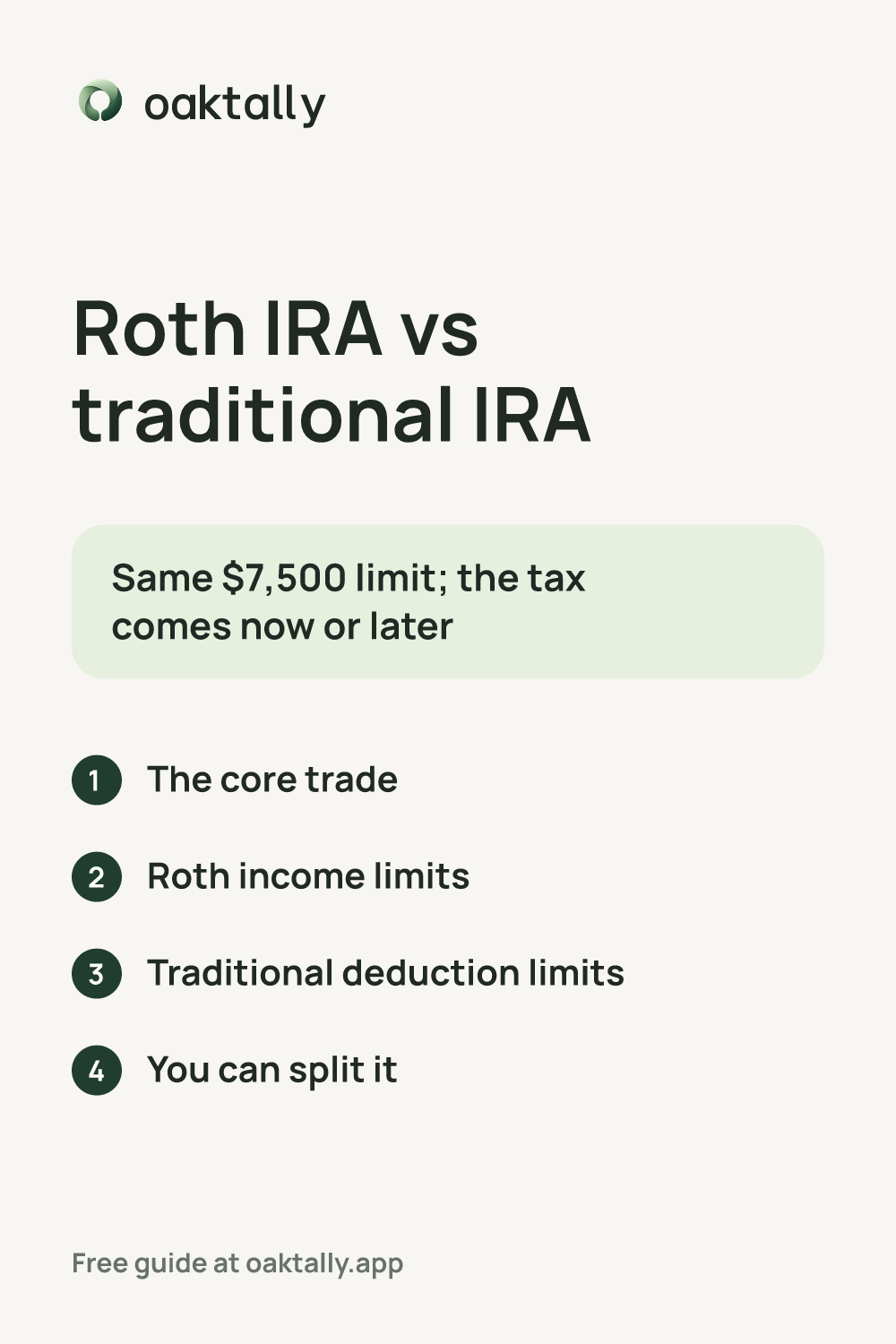

1The core trade
If you expect a higher tax rate later, paying tax now with a Roth often wins. If your rate is high now and likely lower in retirement, traditional can win.
2Roth income limits
The limit uses modified adjusted gross income (MAGI). For 2026 the Roth contribution phases out between $153,000 and $168,000 for single filers, and $242,000 to $252,000 for married couples filing jointly.
Source: IRS
3Traditional deduction limits
If you have a workplace plan, the deduction phases out between $81,000 and $91,000 single, and $129,000 to $149,000 married filing jointly.
Source: IRS
4You can split it
The $7,500 limit is shared, so you can put some in each in the same year.
How to do it in Oaktally
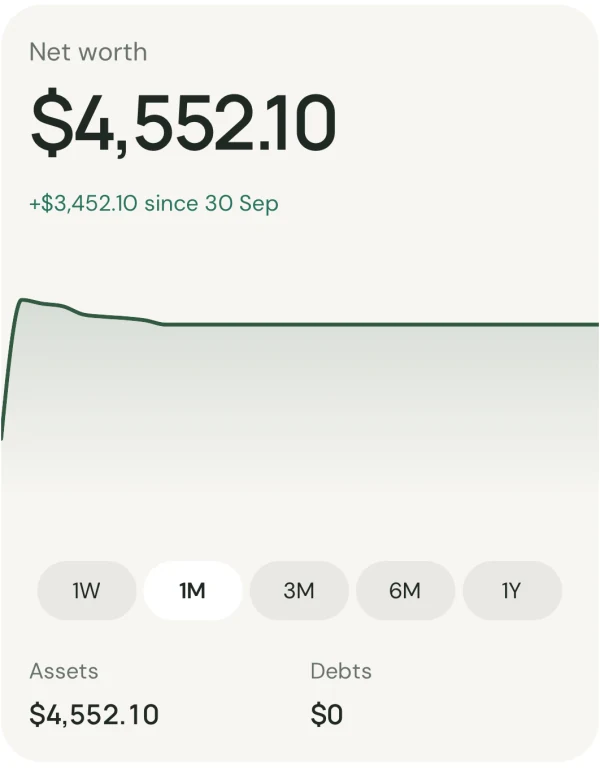
Opening the account is the easy part. Oaktally keeps the balance in your net worth so you see it grow.
- Add the accountAdd your 401(k) or IRA as an investment account with its current balance.
- Update it each statementUse Update balance when your statement arrives, so the number stays current.
- See it in your net worthHome counts it with your other accounts, so you see the whole picture.
Try it with your numbers
See what you can put in for 2026 and what it could grow to.
Run your Roth IRA numbersFrequently asked questions
Can I take money out of a Roth IRA early?
Your contributions can come out any time without tax or penalty. Earnings are tax-free only once you are 59½ and the account is at least 5 years old. Taken earlier, earnings can be taxed and charged an extra 10%, with some exceptions.
Which is better for someone in their 20s?
Many young savers choose a Roth because their tax rate is often lower now than it will be later. It depends on your income.
Further reading
IRS: 401(k) limit increases to $24,500 for 2026, IRA limit to $7,500 ↗IRS: Roth comparison chart ↗Educational examples, not individual financial advice.