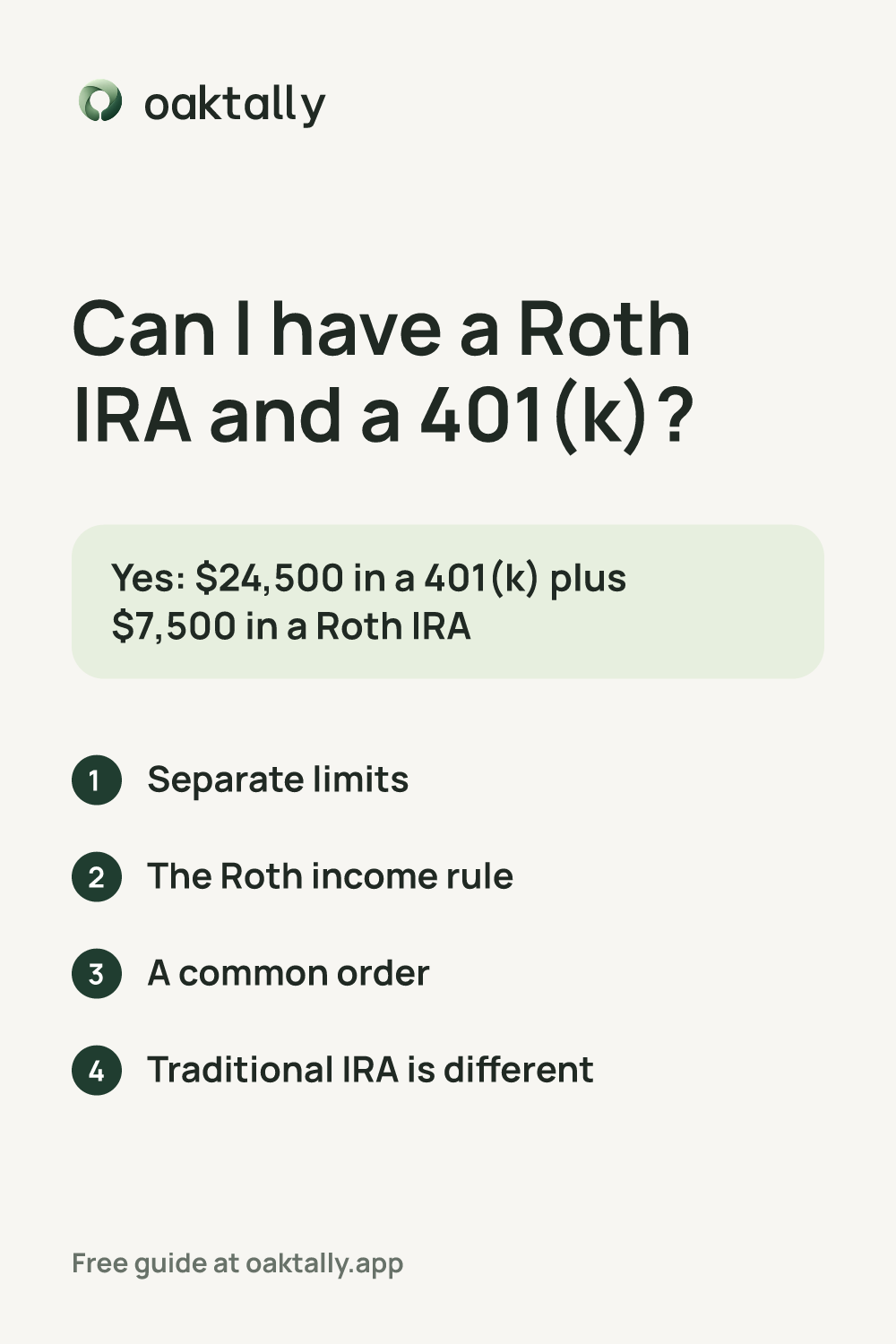

1Separate limits
The 401(k) limit and the IRA limit do not share room. Funding one does not reduce the other.
2The Roth income rule
For 2026, Roth IRA contributions phase out between $153,000 and $168,000 single, and $242,000 to $252,000 married filing jointly.
Source: IRS
3A common order
Get the full 401(k) match first, then fund the Roth IRA, then go back to the 401(k) if you have more to save.
4Traditional IRA is different
With a workplace plan, a traditional IRA deduction phases out from $81,000 single. A Roth IRA has no deduction to lose.
How to do it in Oaktally
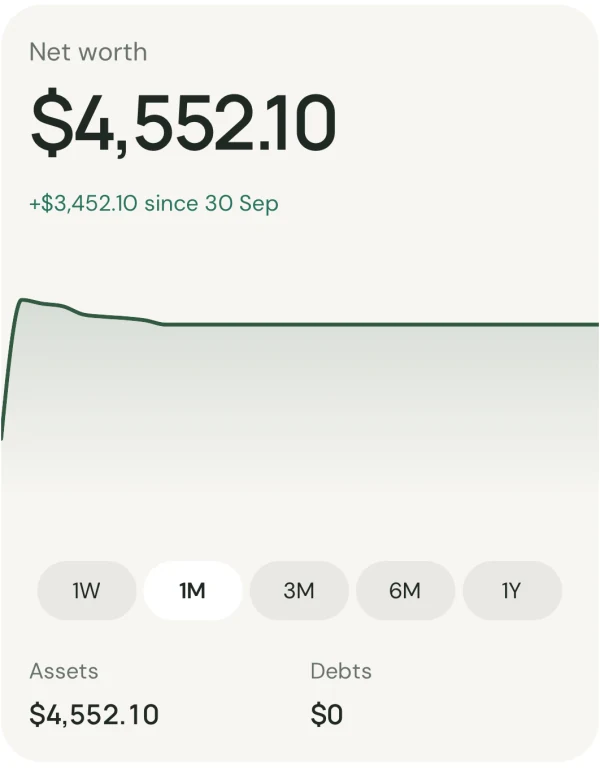
Two accounts are easy to lose track of. Oaktally shows both balances together in your net worth.
- Add the accountAdd your 401(k) or IRA as an investment account with its current balance.
- Update it each statementUse Update balance when your statement arrives, so the number stays current.
- See it in your net worthHome counts it with your other accounts, so you see the whole picture.
Frequently asked questions
Can my spouse have a Roth IRA if they do not work?
Yes. A working spouse's income can fund a spousal IRA if you file jointly, within the same limits.
Do I have to open the Roth IRA at my employer?
No. A Roth IRA is your own account at any brokerage or bank that offers one.
Further reading
IRS: 401(k) limit increases to $24,500 for 2026, IRA limit to $7,500 ↗Educational examples, not individual financial advice.