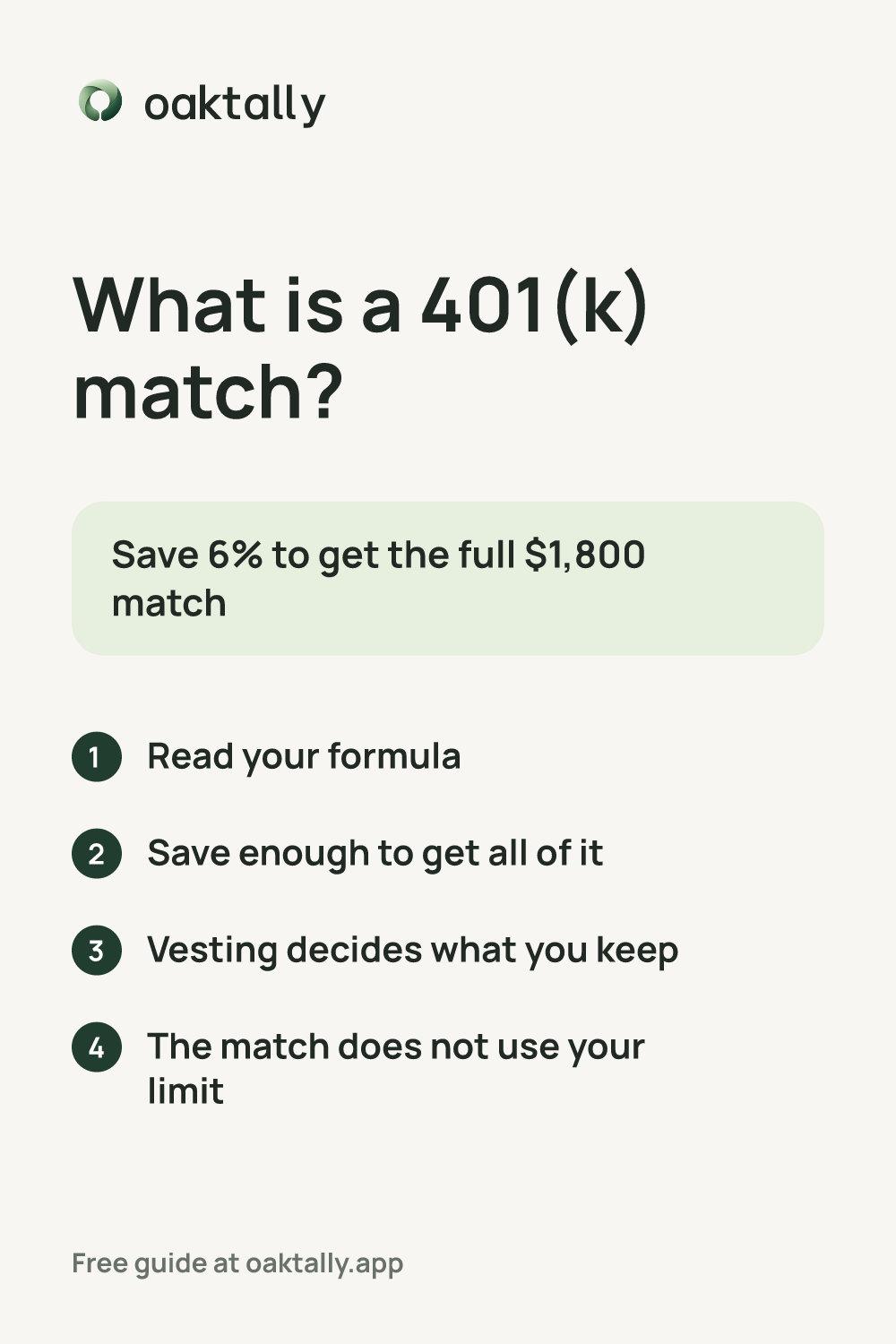

1Read your formula
Plans state it as a percent of a percent, like 50% of the first 6% of pay. Your plan summary or HR portal has yours.
2Save enough to get all of it
Saving less than the match threshold leaves money on the table. In the example, 3% gets only half the match.
3Vesting decides what you keep
Your own contributions are always yours. The match may vest over years: fully after 3 years on a cliff schedule, or step by step over up to 6 years.
Source: IRS
4The match does not use your limit
Employer money does not count toward your $24,500 contribution limit for 2026.
Source: IRS
How to do it in Oaktally
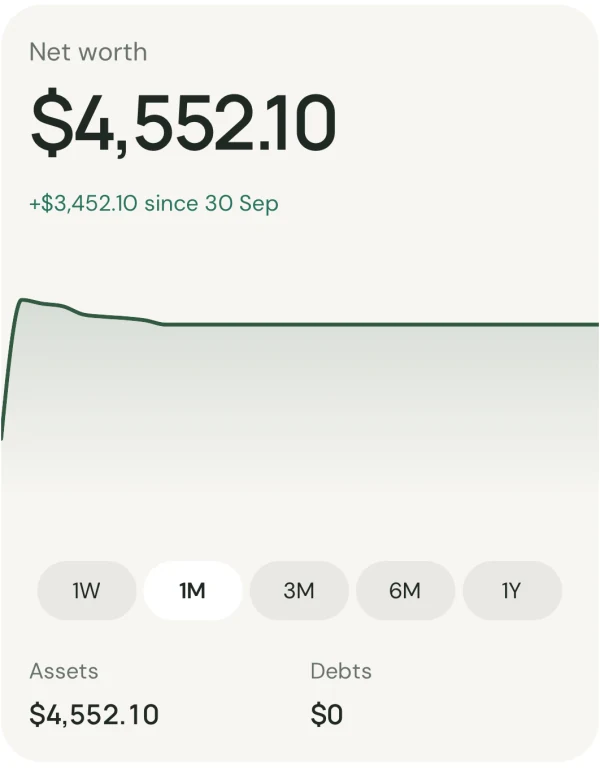
The match only helps if you keep saving. Oaktally shows your retirement balance next to your monthly budget.
- Add the accountAdd your 401(k) or IRA as an investment account with its current balance.
- Update it each statementUse Update balance when your statement arrives, so the number stays current.
- See it in your net worthHome counts it with your other accounts, so you see the whole picture.
Try it with your numbers
See your balance at retirement with your match and the 2026 limit.
Run your 401(k) numbersFrequently asked questions
What happens to my match if I leave?
You keep the vested part. Any part not yet vested goes back to the plan.
Is a match taxed?
Usually not until you withdraw it, like pre-tax contributions. Some plans now offer a Roth match, which is taxed when it goes in.
Further reading
IRS: Retirement topics, vesting ↗IRS: 401(k) limit increases to $24,500 for 2026, IRA limit to $7,500 ↗Educational examples, not individual financial advice.