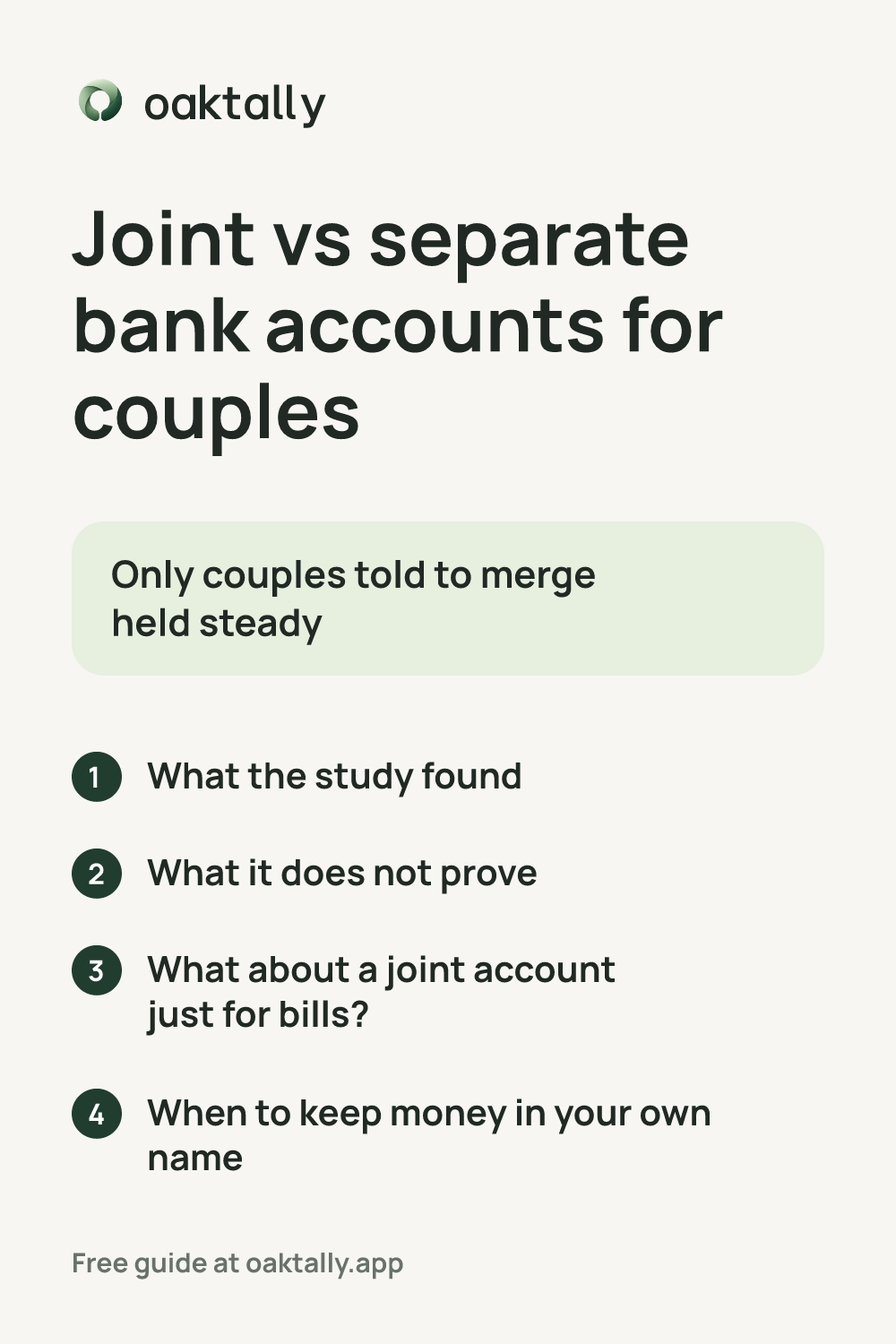

1What the study found
Researchers followed 230 engaged or newlywed couples who all started with separate accounts. Some were told to open a joint account and merge, some to stay separate, and some chose for themselves. After two years, relationship quality had dropped in the separate and choose-for-yourself groups, but not in the merged group.
Source: Olson, Rick, Small and Finkel
2What it does not prove
Everyone was in a first marriage and the average age was 28, so it says little about couples married for decades or marrying again. About 20% of couples did not finish, including some who split up, which could skew the result.
3What about a joint account just for bills?
It is a common compromise, but this study does not back it. Partly merging did not bring the same benefits as merging fully, and one author says more research is needed before drawing big conclusions.
Source: Kellogg Insight
4When to keep money in your own name
Either owner can usually take out the whole balance of a joint account. Kellogg's write-up of the study warns that merging can expose people in a fraught relationship to control or abuse. If you are worried, keep an account only you can reach, or call the National Domestic Violence Hotline at 1-800-799-7233.
Source: CFPB
5How to choose
Start with what you both want, not what the study found. All joint fits if you already see your money as ours. A joint account for bills fits if you want shared costs handled and your own money kept apart. All separate can work if you agree on the split and settle up often.
6Talk about goals in any setup
The researchers think merging helped because couples felt their goals lined up and thought in terms of we. You can work on both without changing banks, though the study did not test that.
How to do it in Oaktally
Oaktally works with all three setups, so you can plan together without moving money first. It was not part of this research.
- Make a Shared planPut rent, groceries and goals in one plan you both see.
- Add a joint account if you have oneShared expenses default to it, and nobody has to settle up.
- Settle up if you pay separatelyAdd what you paid and the split. Oaktally shows who owes whom.
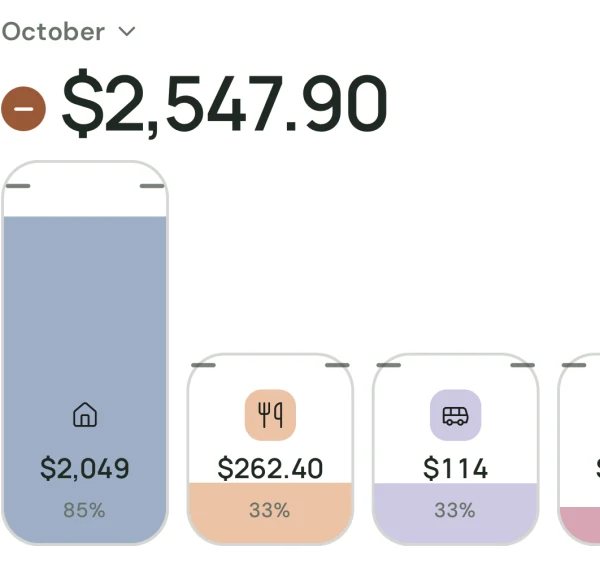
Try it with your numbers
Put both incomes and your shared bills in one plan.
Build a shared budgetFrequently asked questions
Should married couples have joint accounts?
They do not have to. One two-year study favors fully merging for newlyweds, but it was a young, first-marriage group, and merging is not safe in every relationship.
Are separate accounts a bad sign?
No. The study found an average decline over two years, not that separate accounts cause problems for every couple. Accounts your partner knows about are not secrets.
Can we change our setup later?
Yes. You can add a joint account or close one at any time. Agree first on who gets what before you close one.
Further reading
Olson, Rick, Small and Finkel: Common Cents, Journal of Consumer Research, 2023 ↗Journal of Consumer Research study release: Olson, Rick, Small and Finkel, 2023 ↗Kellogg Insight: What the joint account study found ↗CFPB: Can a joint account owner take all the money out? ↗National Domestic Violence Hotline ↗Educational examples, not individual financial advice.