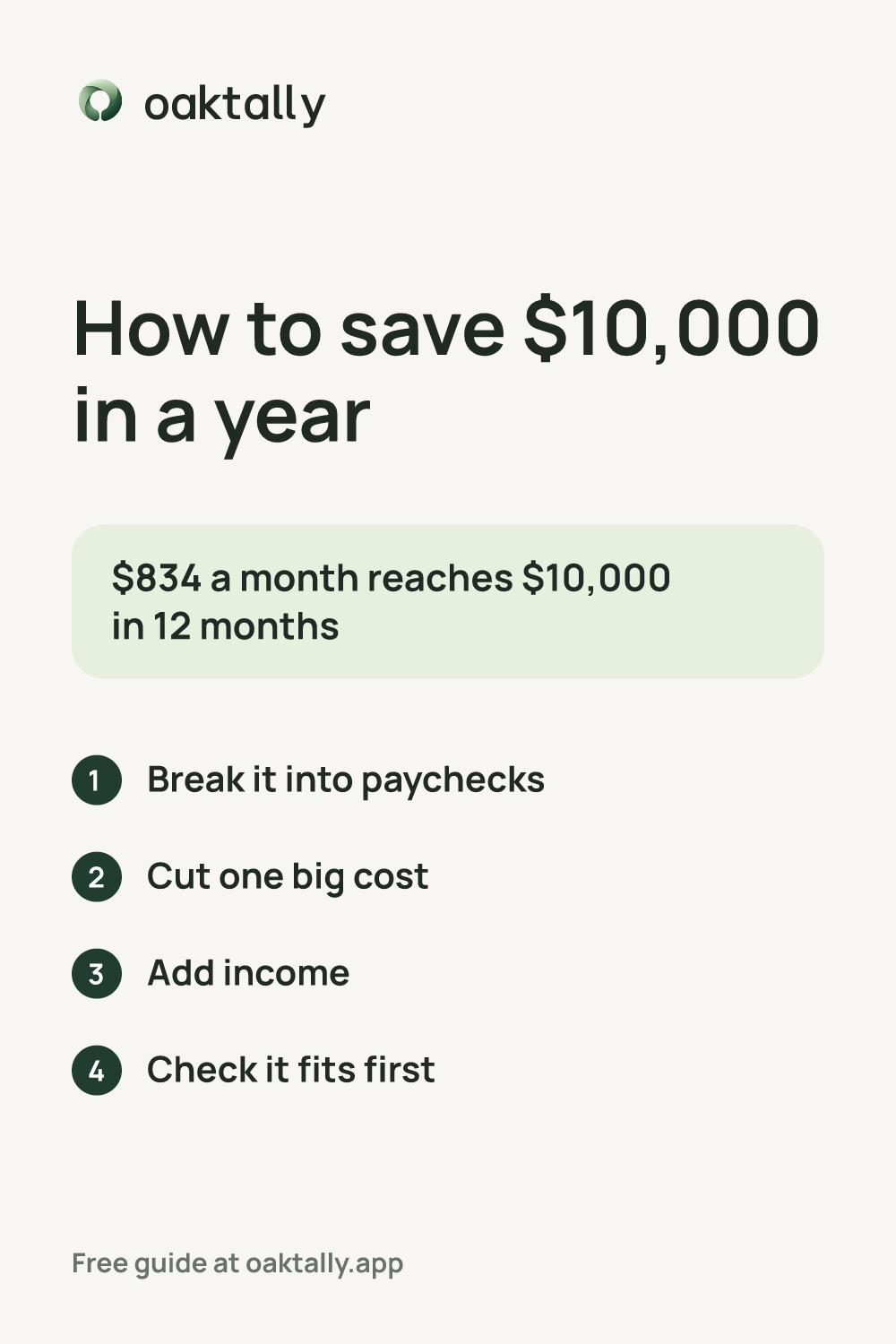

1Break it into paychecks
$10,000 is $834 a month or $385 every two weeks. Set an automatic transfer for the day after payday.
2Cut one big cost
Rent, a car payment, insurance or subscriptions. Cutting $200 a month from one bill covers about a quarter of the goal.
3Add income
Extra shifts, freelance work or selling things you do not use. Send every extra dollar straight to savings.
4Check it fits first
Look at what is left after bills each month. If that is $500, $834 does not fit: at $500 a month, $10,000 takes 20 months. Move the date or find the other $334.
5Check your pace each month
By month six you should be near $5,000. If you are behind, raise the deposit now, not in December.
How to do it in Oaktally
A year is long enough to drift. Oaktally shows each month whether you are on pace.
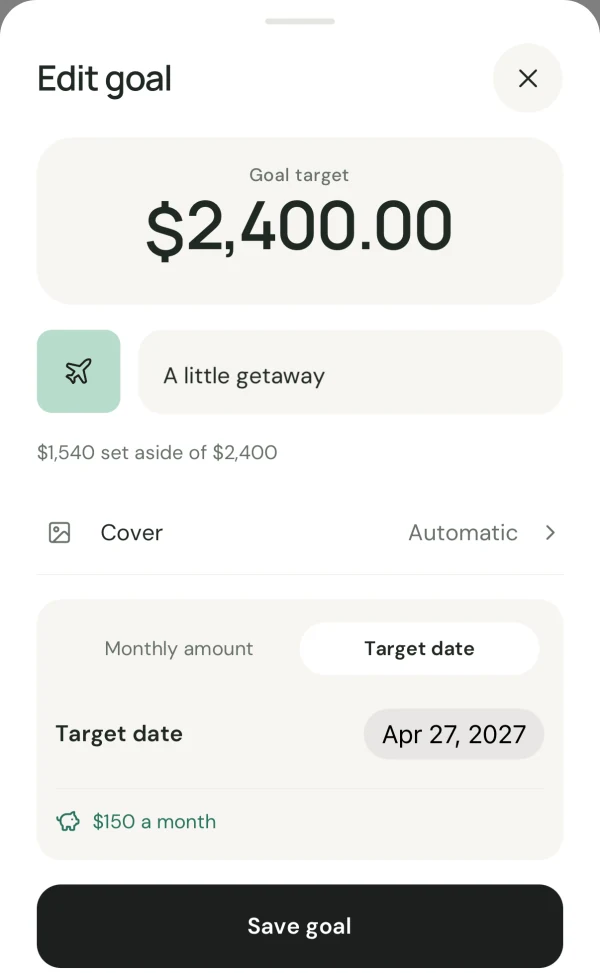
- Add a $10,000 goalIn Plan, add a goal, type $10,000 and choose Target date: a year from now.
- Save the amount it showsTarget date shows what to save each month. Tap Add money each payday.
- Watch your paceThe ring shows how far along you are, so you know early if you fall behind.
Try it with your numbers
Enter your target, what you have and your deadline.
Plan deposits by dateFrequently asked questions
Is saving $10,000 in a year realistic?
It is $193 a week. On a $60,000 salary that is about 17% of pay before tax, so most people need cuts and extra income.
Where should I keep the money?
In a separate high-yield savings account, so it earns some interest and stays apart from spending.
Further reading
CFPB: Income, bills, spending and savings tools ↗Educational examples, not individual financial advice.